 Image 1 of 1
Numerology and the Nei Jing — No CEUS version.
Explore the hidden numerical, temporal, and cosmological architecture of the Huang Di Nei Jing in this 11-hour independent study course for acupuncturists and Chinese medicine practitioners.
This course examines how number, time, Yin-Yang, the Five Phases, Six Qi, and classical channel theory are woven together within the medical classics—and how these relationships can inform clinical reasoning, acupuncture point selection, and treatment strategy.
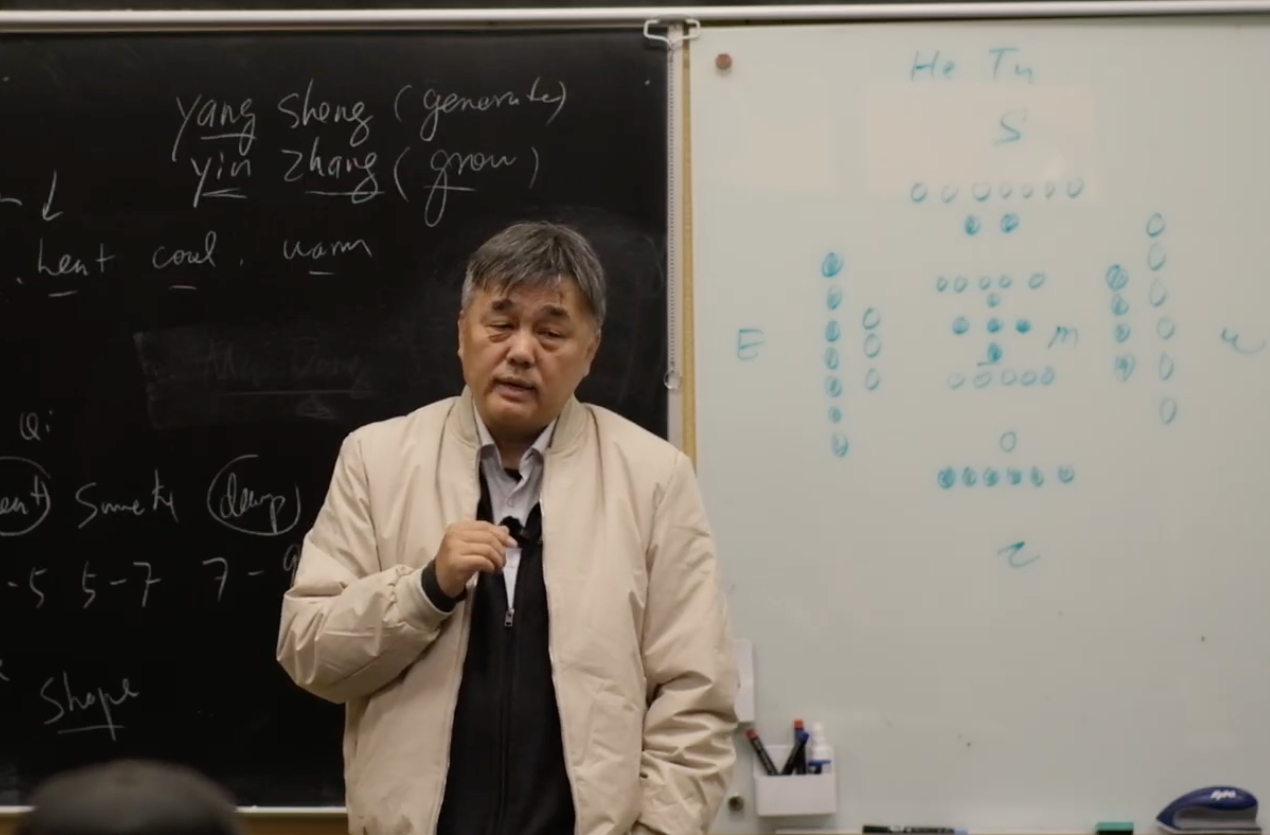
Topics include the numerical significance of the 361 acupuncture points; He Tu and Luo Shu correspondences; the 19 pathomechanisms; the 24 solar terms and 28 lunar mansions; Water and Fire, Qi and Essence; Imperial and Ministerial Fire; Five Shu and Yuan-Source point theory; the Four Qi and Five Flavors; Six Channel and organ-clock relationships; opening and closing dynamics; classical approaches to heat; the Heart-Kidney axis; formula numerology; and the concept of “prescribing time.”
Particular attention is given to understanding the Five Shu points through flavor, thermal nature, phase, and channel relationships, allowing students to move beyond memorized point indications toward a more integrated classical approach to acupuncture prescription. The course also explores how point combinations may be understood through functional analogies with individual herbs and classical formulas.
The material is presented as an interpretive framework for deepening the study of the Nei Jing and related classical texts while maintaining the importance of pattern differentiation, anatomy, safety, and patient-specific clinical evidence.
Refund policy: No refunds once course is purchased.
Numerology and the Nei Jing — No CEUS version.
Explore the hidden numerical, temporal, and cosmological architecture of the Huang Di Nei Jing in this 11-hour independent study course for acupuncturists and Chinese medicine practitioners.
This course examines how number, time, Yin-Yang, the Five Phases, Six Qi, and classical channel theory are woven together within the medical classics—and how these relationships can inform clinical reasoning, acupuncture point selection, and treatment strategy.
Topics include the numerical significance of the 361 acupuncture points; He Tu and Luo Shu correspondences; the 19 pathomechanisms; the 24 solar terms and 28 lunar mansions; Water and Fire, Qi and Essence; Imperial and Ministerial Fire; Five Shu and Yuan-Source point theory; the Four Qi and Five Flavors; Six Channel and organ-clock relationships; opening and closing dynamics; classical approaches to heat; the Heart-Kidney axis; formula numerology; and the concept of “prescribing time.”
Particular attention is given to understanding the Five Shu points through flavor, thermal nature, phase, and channel relationships, allowing students to move beyond memorized point indications toward a more integrated classical approach to acupuncture prescription. The course also explores how point combinations may be understood through functional analogies with individual herbs and classical formulas.
The material is presented as an interpretive framework for deepening the study of the Nei Jing and related classical texts while maintaining the importance of pattern differentiation, anatomy, safety, and patient-specific clinical evidence.
Refund policy: No refunds once course is purchased.